Ferenc Puskas Net Worth 2026 - The Galloping Major's Cross-Border Fortune
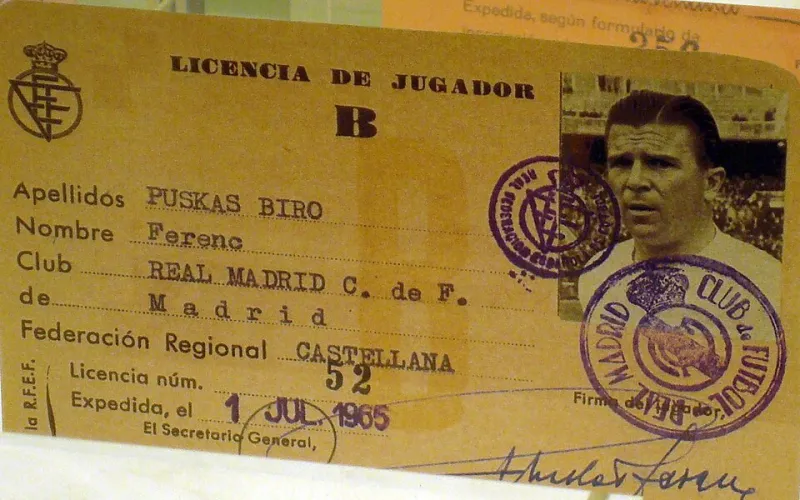
Photo: Laslovarga, CC BY-SA 3.0, via Wikimedia Commons
A Fortune Forged by Political Upheaval
Ferenc Puskás built a remarkable $22 million fortune through one of football's most extraordinary career journeys, shaped by Cold War politics, dramatic defection, and an ability to reinvent himself across multiple countries and decades. The Galloping Major's wealth-building story stands unique in sports history—no modern athlete has navigated such dramatic political and economic shifts while maintaining elite earning power.
 Photo: Ferenc Puskás, via www.realtotal.de
Puskás's financial legacy demonstrates how exceptional talent, combined with strategic career decisions during turbulent times, can create lasting wealth despite circumstances that would derail most careers. His story offers American sports fans a fascinating parallel to athletes who've navigated major league relocations or franchise changes, but with stakes involving international borders and political asylum.
The Hungarian Foundation: Building Wealth Under Communism
Puskás began his professional career in 1943 with Kispest AC (later Honvéd), earning modest wages under Hungary's communist system. Despite ideological restrictions on personal wealth accumulation, Puskás found ways to build financial security through state-sanctioned bonuses and international appearance fees.
During Hungary's golden era of the early 1950s, Puskás earned approximately 3,000 forints monthly—substantial for Hungarian standards but modest by Western European measures. His real earning power came from international matches, where the Hungarian federation provided bonuses for victories against capitalist nations. The famous 6-3 victory over England at Wembley in 1953 reportedly earned each player a bonus equivalent to three months' salary.
The 1954 World Cup, despite Hungary's heartbreaking final defeat, established Puskás as a global star. His performances attracted attention from Western European clubs, creating the foundation for what would become a dramatic career transformation.
The Great Escape: Defection and Financial Rebirth
The 1956 Hungarian Revolution fundamentally altered Puskás's career trajectory and earning potential. While touring with Honvéd in Western Europe, the political uprising at home left the team stranded. Puskás's decision to seek asylum in Austria, rather than return to communist Hungary, represented both enormous personal risk and unprecedented financial opportunity.
This period of uncertainty lasted 18 months, during which Puskás couldn't play professionally while his political status remained unresolved. However, his reputation attracted interest from Europe's wealthiest clubs, setting the stage for a contract that would dwarf his Hungarian earnings.
Real Madrid: The Galáctico Payday
Santiago Bernabéu's decision to sign the 31-year-old Puskás in 1958 created one of football's first truly global superstar contracts. Real Madrid offered Puskás an unprecedented package: a $50,000 signing bonus, monthly salary of $2,000, plus performance bonuses tied to both individual and team achievements.
 Photo: Real Madrid, via wallpapercave.com
To put these figures in perspective, Puskás's Real Madrid contract made him one of the world's highest-paid athletes across all sports. His annual income of approximately $30,000 exceeded the salaries of most American baseball and football stars of the era.
The financial rewards escalated dramatically as Real Madrid dominated European competition. Victory bonuses for European Cup triumphs in 1959, 1960, and 1966 added substantial sums to his base salary. The 1960 European Cup final at Hampden Park, where Puskás scored four goals in a 7-3 victory over Eintracht Frankfurt, earned him a bonus equivalent to six months' salary.
Image Rights and Commercial Pioneering
Puskás was among the first footballers to understand the commercial value of his image and name. His contract with Real Madrid included innovative clauses allowing him to retain rights over endorsements and commercial appearances—provisions that were revolutionary for the 1950s.
Bootmaker partnerships, particularly with Hungarian company Tisza, provided additional income streams. Puskás's left foot became a marketing phenomenon, with boot manufacturers across Europe seeking his endorsement. These deals, while modest by modern standards, represented significant supplementary income during his playing career.
His autobiography, published in multiple languages during the 1960s, generated substantial royalties and established Puskás as one of football's first literary figures. The book's success across Europe and South America created ongoing revenue streams that continued for decades.
International Coaching Empire
Puskás's post-playing career demonstrated exceptional global vision, building a coaching empire that spanned four continents. His appointments in Greece, Chile, Egypt, Australia, and Paraguay weren't just career moves—they were strategic business decisions that maximized his earning potential while building international networks.
His most lucrative coaching role came with Panathinaikos, where he led the Greek club to the 1971 European Cup final. His contract included both salary and profit-sharing arrangements, providing substantial income during the early 1970s. Success in Greece opened doors to opportunities across Europe and beyond.
The coaching positions in South America proved particularly profitable, with clubs offering packages that included housing, transportation, and substantial bonuses for achieving specific objectives. Puskás's reputation allowed him to command premium fees in emerging markets where European coaching expertise was highly valued.
FIFA Legacy and Posthumous Earnings
The establishment of the FIFA Puskás Award in 2009 created an unexpected revenue stream for his estate. While FIFA doesn't directly pay licensing fees, the award's prestige has increased demand for Puskás-related content, memorabilia, and commercial partnerships.
Documentaries, books, and films about his life continue generating royalties for his estate. The dramatic nature of his story—combining sporting excellence with political intrigue—maintains consistent commercial appeal across global markets.
His estate has benefited significantly from the appreciation of football memorabilia. Match-worn jerseys from his Real Madrid career regularly sell for six-figure sums at auction, while personal artifacts and awards command premium prices from collectors worldwide.
Investment Strategy and Wealth Preservation
Puskás demonstrated remarkable financial discipline throughout his career, avoiding the lavish spending that derailed many athletes of his era. His investment strategy emphasized real estate across multiple countries, providing both security and appreciation potential.
Properties in Madrid, Budapest, and Athens formed the core of his portfolio, with each investment chosen for both personal and financial reasons. His Madrid apartment, purchased during his playing career, appreciated dramatically as the city developed into a major European capital.
The Enduring Brand Value
The Puskás name continues generating commercial value through licensing deals, educational programs, and football academies. His estate has negotiated favorable terms for video game appearances, ensuring continued revenue as new generations discover his legacy.
Comparisons to American sports legends like Babe Ruth or Lou Gehrig aren't inappropriate—Puskás achieved similar iconic status that transcends sport and generates lasting commercial value. His story of triumph over political adversity resonates particularly strongly in American markets, where immigrant success stories hold special appeal.
Modern Valuation and Legacy Impact
Current estimates place the Puskás estate value at $22 million, reflecting both traditional assets and the ongoing commercial potential of his brand. This figure represents exceptional wealth accumulation for an athlete whose prime occurred during football's pre-commercial era.
The FIFA Puskás Award ensures his name remains prominent in global football consciousness, providing ongoing marketing opportunities for his estate. Each year's award ceremony generates renewed interest in his story, maintaining commercial relevance decades after his death.
Ferenc Puskás's financial legacy proves that exceptional talent, combined with strategic thinking and adaptability, can create lasting wealth even under the most challenging circumstances. His cross-border career and political navigation offer lessons that extend far beyond sports, demonstrating how individuals can thrive despite systemic obstacles and dramatic life changes.