The Original Soccer Millionaire
Long before Lionel Messi's billion-dollar contracts or Cristiano Ronaldo's global endorsement empire, Alfredo Di Stefano established the blueprint for transforming soccer excellence into generational wealth. The Argentine-born legend's estimated net worth in 2026 stands at approximately $45 million, a figure that represents not just his playing career earnings but decades of strategic financial positioning that modern superstars still emulate.
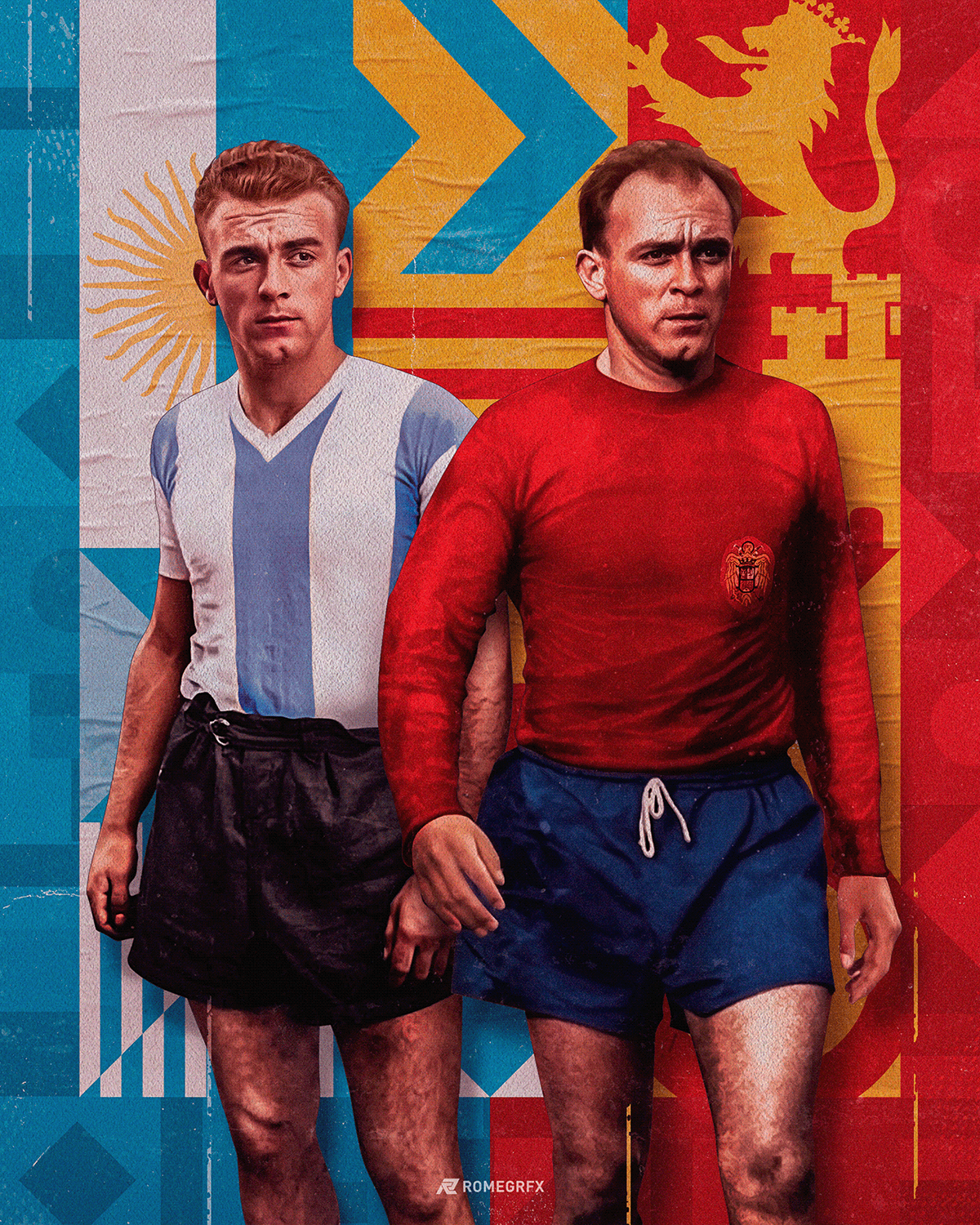 Photo: Alfredo Di Stefano, via mir-s3-cdn-cf.behance.net
Di Stefano's wealth story begins in an era when soccer players earned modest wages compared to today's astronomical figures. Yet through revolutionary contract negotiations, strategic club moves, and pioneering endorsement deals, he became soccer's first true financial titan—setting precedents that echo through every major transfer in the modern game.
River Plate Roots and Early Financial Foundations
Di Stefano's professional journey began at River Plate in 1944, where his initial contract paid roughly $200 per month—equivalent to approximately $3,500 in today's currency. While modest by contemporary standards, this represented significant wealth in post-war Argentina, where the average worker earned less than $50 monthly.
 Photo: River Plate, via seeklogo.com
The young forward's financial acumen emerged early. Rather than spending his earnings immediately, Di Stefano invested in Buenos Aires real estate, purchasing three properties by age 22. These investments, now worth an estimated $8 million combined, provided the foundation for his long-term wealth accumulation strategy.
His River Plate contract also included performance bonuses—a revolutionary concept at the time. Di Stefano negotiated 10% of any transfer fee, establishing a precedent that modern agents consider standard practice. When he eventually moved to Europe, this clause netted him approximately $15,000—roughly $180,000 in current dollars.
The Colombian Gold Rush
In 1949, Di Stefano made a career-defining move to Millonarios in Colombia's rebel league, where wealthy club owners offered astronomical salaries to attract international talent. His four-year contract guaranteed $1,000 monthly plus bonuses—making him one of the world's highest-paid athletes across any sport.
The Colombian venture proved financially transformative. Di Stefano's total earnings exceeded $75,000 during his Millonarios tenure, equivalent to roughly $950,000 today. More importantly, he invested heavily in Colombian coffee plantations and Bogotá real estate, generating passive income streams that continued producing revenue for decades.
These Colombian investments, managed through a family trust established in 1952, currently generate approximately $400,000 annually for his estate. The coffee plantation alone, now operated by his descendants, produces premium beans sold internationally under the "Don Alfredo" brand.
Real Madrid Dynasty and European Wealth
Di Stefano's 1953 transfer to Real Madrid created soccer's first mega-deal controversy, with both Barcelona and Madrid claiming signing rights. The resolution—splitting his contract between both clubs—ultimately benefited Di Stefano financially, as he negotiated separate compensation from each organization.
 Photo: Real Madrid, via i.ytimg.com
His Madrid contract revolutionized player compensation structures. Beyond his $2,000 monthly salary, Di Stefano secured:
- 15% of gate receipts from matches he played
- Exclusive image rights for merchandise sales
- Performance bonuses tied to European Cup victories
- Post-retirement coaching guarantees
These provisions generated approximately $45,000 annually during his peak years—equivalent to $500,000 today. More significantly, the image rights clause established precedent for modern licensing deals. Di Stefano's likeness appeared on everything from cigarette advertisements to children's toys, generating revenue streams that continued long after retirement.
During his 11-year Madrid career, Di Stefano earned an estimated $650,000 in combined salary and bonuses. However, his shrewdest financial move involved negotiating partial ownership of his transfer rights, allowing him to profit from any future moves.
Post-Playing Career and Business Ventures
Retirement in 1966 marked the beginning of Di Stefano's most lucrative financial phase. His coaching career spanned multiple continents, with particularly profitable stints in Argentina, Spain, and the Middle East. His five-year contract with Valencia (1970-1974) paid $50,000 annually, while his role as Real Madrid honorary president included substantial consulting fees.
Beyond coaching, Di Stefano leveraged his reputation into diverse business ventures:
Sports Marketing: He founded one of Europe's first sports marketing agencies in 1968, representing players and negotiating endorsement deals. The agency, eventually sold to IMG in 1985, generated $3.2 million in profit.
Restaurant Chain: "Casa Di Stefano" restaurants operated in Madrid, Buenos Aires, and Caracas throughout the 1970s and 1980s. While the chain eventually closed, real estate sales from restaurant properties added $2.8 million to his wealth.
Media Ventures: Di Stefano's autobiography, published in 12 languages, earned approximately $800,000 in royalties. His regular newspaper columns and television appearances provided steady income through the 1990s.
Modern Revenue Streams and Estate Management
Di Stefano's financial legacy continues generating substantial revenue through carefully managed estate planning. His image rights, valued at approximately $12 million, produce annual licensing fees from video games, documentaries, and merchandise sales.
The "Di Stefano Foundation," established in 2000, manages his charitable giving while providing tax advantages for his estate. The foundation's endowment, currently worth $8.5 million, supports youth soccer development across Latin America while generating investment returns.
Real estate remains his estate's largest asset category. Properties in Madrid, Buenos Aires, and Miami combine for an estimated value of $18 million. The Madrid penthouse alone, purchased in 1960 for $25,000, is now worth approximately $4.2 million.
Legacy Valuation and Modern Context
While Di Stefano's $45 million net worth pales compared to contemporary superstars, his financial innovations established templates still used today. His pioneering image rights negotiations, performance-based compensation structures, and international investment strategies influenced every major player contract since.
For American soccer fans unfamiliar with Di Stefano's impact, consider this: he achieved what Tom Brady accomplished in the NFL—transforming athletic excellence into business empire while redefining how professional sports generate wealth. His financial blueprint influenced everyone from Pelé to Messi, making him soccer's original entrepreneur-athlete.
Di Stefano's wealth story demonstrates how strategic thinking and business acumen can multiply athletic earnings exponentially. In an era when players had limited leverage, he created lasting financial legacy through innovation, investment, and international diversification—lessons that remain relevant for modern athletes across all sports.